Showing posts with label culture. Show all posts

Thursday, 12 May 2016

Preparing Trustees for Board Elections 2016


‘Board  of Trustees and Principals have a significant responsibility for ensuring the Catholicity of our schools….consequently it is extremely important for Boards of Trustees...to take an active part in enhancing the Special Catholic Character’ (Wanden & Birch, 2008).

This presentation will help new and existing board members to be the best leaders and role models possible as together we ensure we keep Jesus Christ at the heart of all we do in our special Catholic character schools.
Please feel free to share this with potential and existing trustees within our Catholic schools across New Zealand. There are presentation notes to go with each slide. You can email me for these if you wish.

Thursday, 3 December 2015

reaCh into the future - 8 positives and 5 developments

Reach for the Stars as Lifelong Learners in the Catholic Faith
This is our vision statement developed as a result of community consultation just after I became principal in 2007. We are preparing to relaunch our vision as we reaCh into the future in readiness for 2016.
 
reaCh

At the start of our final school term for 2015, we recorded the key skills and attitudes our learners develop as they progress from Junior Hub 1 to the end of Senior Hub 2 (Year 1 to 8). Our collaborative teaching methods and the resources we use (including but not limited to digital ones) are the tools to support our learners to be the best versions of themselves by the time they transition to high school. 
Our Deputy Principal, Paul Cartlidge creatively collated these progressions onto a weebly site to help make them explicit and tangible. Our next step is to develop an informative brochure to visually share these skills and attitudes with our community.
Our Assistant Principal, Siobhan Burke reminded us about the brochure and be theme captured our attention at the Catholic Convention.

This got me thinking...
DRAFT ideas at this stage
Here are my active reflections around the potential of using the word reaCh.

Our vision to Reach for the Stars as Lifelong Learners in the Catholic Faith can be captured in the single word reaCh.
respectfully engage & achieve with and through Christ
r represents our 4'R's - respect, reverence, resilience and good relationships
engage links to our school wide goal:To engage in deep learning for success
a is the way we aim to actively achieve in all that we do
Ch reminds us how we do everything, in, with and through Christ. Ch also reminds us of the church and the importance of being active in our Catholic faith.

Other variations could include:


What will this look like in 2016 ? I will look forward to sharing this with you when we develop it further with input from students, board, staff and whanau.

Positives from 2015 and next steps going forward for 2016
Across the school all of the children are benefitting from:
1. A dedicated class teacher who is a point of contact for children and parents. 
2. Having the expertise of a team of two to three teachers who plan, review and action the teaching and learning for all children across hubs.
3. A dedicated teaching and learning site updated weekly. Parents can keep up with their children's learning and initiate learning conversations at home.
4. Hub and class blogs, regularly updated with photos and snippets of information pertinent to each class or hub.
5. The senior hub learners work towards competent independence by the end of Year 8. Thirty-two days total during Year 7 and 8 are spent at St Kevin's high school for Tech classes. Our Year 8's feel throughly prepared for high school. Listen to Siva and Trish share their views.

6. Staff email class groups on a weekly basis. Communication is better than ever before with the newsblog the school website and our Facebook page updated regularly. 
7. Specialist teachers and teacher aides add depth of learning and provide further support and extension for our children.
8. Individual student blogs support engagement and achievement in the Senior Hub. Student blogs gives students a global audience, a purpose for writing beyond the eyes of the class teacher.
Further developments for 2016 include: 
1. Consolidation of independent learning strategies at the start of Senior Hub 2 (Yr 6) and at the end of Senior Hub 2 (Yr 8) as the learners transition into the hub and off to high school.
2. A review and focus on hub expectations across the school in relation to our school values - the 4R's.
3. The potential opportunity to use student blogs in Senior Hub 2 (Years 6 to 8) as formative assessment portfolios.
4. The use of Linewise in relation to digital devices and access to acceptable learning resources.


5.Further development of the reaChmodel and an informative brochure as explained above for parents and the community to be shared at the first Family Learning Hui.

In 2015 we actively created learning spaces for deeper engagement in learning. We developed our Engaging Learning Spaces (ELS's) based on our schoolwide goal: To engage in deep learning for success. We have the flexibility to utilise our spaces to best suit the needs of our learners across the school. We will continue to review and refine our ELS's based on feedback and continued active reflection as we enthusiastically move forward into 2016. 


Sunday, 8 November 2015

How often do we think deeply about what we are doing? A purposeful visioning process Part 1

"Close your eyes while I read the first draft of your vision..."
After seven hours of deep thinking, classic brainstorming and 10/4 voting, I closed my eyes along with fifteen fellow principals. While our inspirational facilitator slowly read through the one page draft vision document, I immediately felt a sense of connection and empowerment. I was not alone. Everyone of us in the room could hear our voice and our words reflected in this authentic document that is the first draft of the guiding light for the New Zealand Catholic Primary Principal's Association (NZCPPA). Along with agreed values, it was the articulation of actions that immediately brought the vision to life.

Being an active participant and contributor during the NZCPPA Visioning Day in Auckland was a privilege. Starting the day at 8:30 am and having the first draft of an authentic vision ready to review by 3:30pm was made possible by the purposefully planned work of our skilled facilitator and principal Mary Wilson.
Here are my notes and photos of slides from this powerful experience. I believe they capture the essence of the day and will be a guide for reflection for fellow principals and leaders:

Visioning can come about in three ways - telling, consulting and co creation. Co creation is the model that works and the model we used with Mary. She explained that many principals find co creation the hardest as they aren't involved. Instead they are gifted with a one page vision that will truly belong to the community. It is an authentic living document. The principal becomes the caretaker of the vision and then promotes and actions it.
Principals at work during the visioning process
As an executive association who meet for only twelve days per year, it is important to ensure time together is maximised. Probe inquiry questions (deep and specific questions) are prepared by the facilitator in relation to all documents connected with the school or business (eg. school website, prospectus). An organisation might be given seventy probes as an outcome of exploring the key documents and then they are narrowed down to eight to ten questions to be used over two days. The NZCPPA have a specific and global job and four probes suited the one day session. These were the probe questions taken from potentially ten questions based on the literature from the NZCPPA:
  • What must we do to ensure we initiate and participate in educational debate and policy development reflecting our Catholic ethos ?
  • What systems and structures do we need to provide a collective voice for Catholic principals at national level ?
  • What systems and structures do we need to ensure our time together throughout the year is used for its maximum impact in leading the NZCPPA ?
  • What are the most effective ways to communicate with our principals to ensure we clearly communicate and consult ?
Classic brainstorming, 10/4 voting and the 'golden rule' of no discussion enable the day to be a purposeful 'idea generation' day. This is exactly what it was.

Classic Brainstorming
The recorder or leader of the group writes down verbatim what each person says in response to the probe question. You can pass but there can be no discussion. Everyone in the group gets a chance to respond and you keep going round the group. The questions and the responses are all numbered. The next step is to ask if anything needs to be clarified and the person who owns the response can give one explanation. Then the leader asks the group if any of the responses are the same or similar and these can be linked together (with affirmation from the responders).
10/4 voting
Mary believes this is the best consensus tool. Everyone has ten votes and can only spend ten votes in any one round. These are recorded by tally marks and the recorder gets a chance to vote too. The next step is to calculate and circle the top three responses from the group. People end up having deep thought because they can't get into discussion. Each group follows the same process and the top three responses are collated into a new document. Everyone then gets a chance to have a final private vote. As Mary explained, "The cream rises to the top". You can use this process with children as well. No one can take over, everyone has equal voice and equal vote.

Final votes and collation of responses
Everyone receives a two page sheet of the top responses and can make ten private votes on the paper. These are collated on a master page. The leaders get together and formulate the first draft based on the top responses by creating paragraphs around the big themes. Everyone then gets a chance to critique this on their own by crossing out parts of it or circling key points. Any suggestions are written on the back and these changes contribute to second draft. For the vision to become alive, it's important that it is written in the present tense and not the future tense.
Life cycle of an organisation - Forming, storming, norming and performing
A. Forming Stage 
This involves intellectual collaboration and is exciting and tiring. Skilled consensus is used to reach a decision and create a shared vision.
B. Storming Stage 
This is a battle between ego and we go. Robust debate is about putting your ego to one side and listening to other people. It is vital to surface and air concerns and have the courage to address them.
C. Norming Stage
New values and beliefs begin to form. We are all a footprint of the life we have lived. This is where norming around an organisations core values develop. It is always important to unpack the core values at the beginning of each year and develop a two sentence definition of what each of the values mean. Alignment begins in the norming stage and you get a collective confidence about how you act in the workplace.
Leadership is around influence. 33% influence is necessary to make change happen. Resistors do the 'black hat' thinking for you and it is important to talk to them each day. Leadership teams shouldn't offer solutions, instead ask the question - 'What's your 
question ?' or say 'Help me to understand..'. This is a great way to start a challenging conversation. Let the silence do the lifting.. don't leap in and offer solutions or answers.
D. Performing Stage
Openness and honesty is important. We learn from our mistakes in a continuous cycle of learning and improvement.
The Magic Line
It is worth having and A3 laminate version of this displayed on the wall in your workplace. It gives ownership, accountability and responsibility to everyone. Every morning we can make a decision to lead our life above or below the line. We need to focus on ourselves and not others and decide where we are. We need to think about what takes us below the line and what we can do to help others get back above the line. 
Core Values
It is important to identify at least four values and unpack their meaning. The values become a way of living and working together to realise the vision. The values need to be recorded as action statements rather than words. They can also be voted on using the 10/4 voting process.
             
       
This is the slide of the NZCPPA values before we voted to take them from nine to five values.
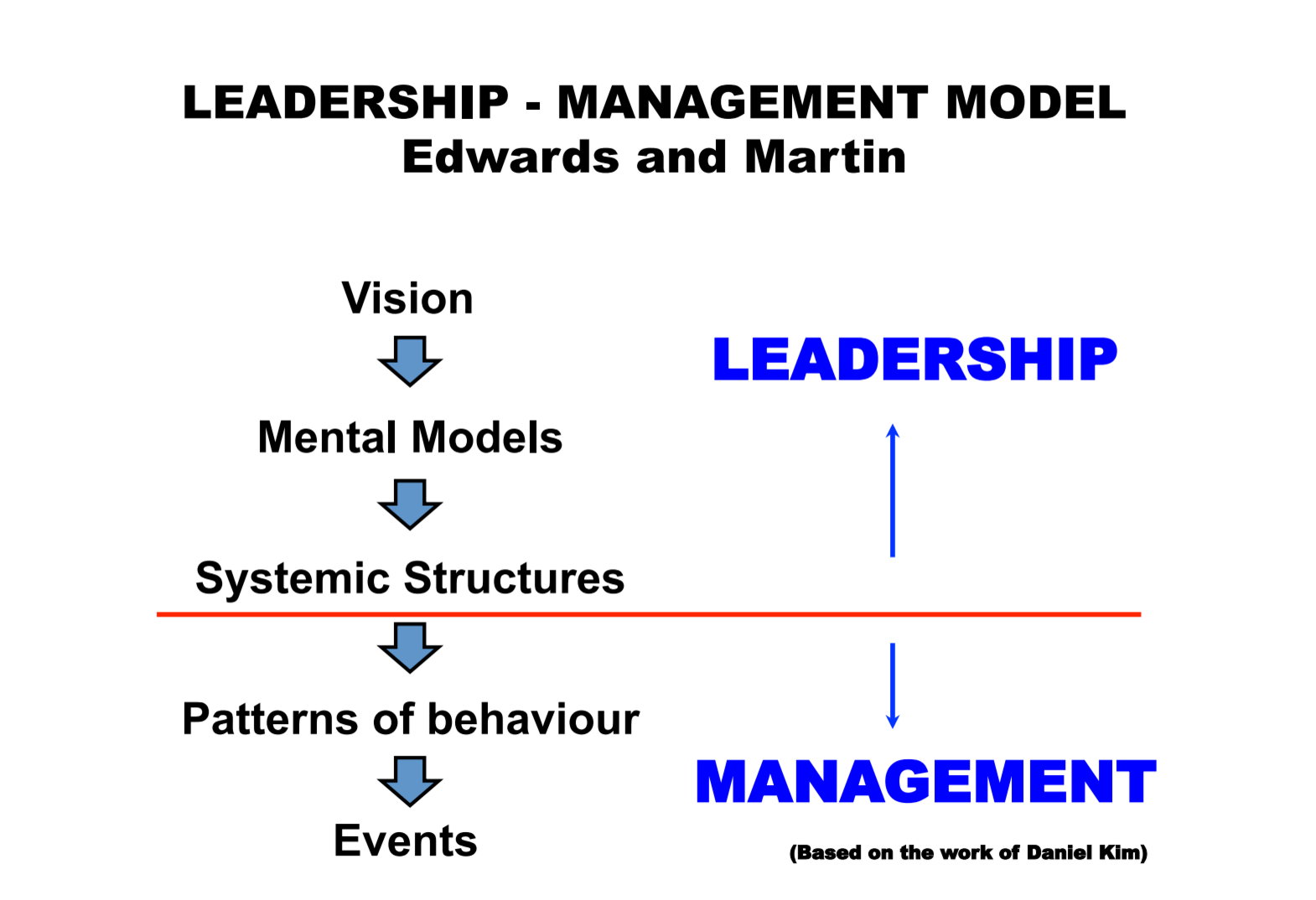
Leadership and Management Model
Make sure the systems and structures are aligned with the vision to be above the line. The higher up the levels of perspective (on the left of the slide) the more leverage we have. Values and beliefs need to become mental models for the vision to be lived. 

This visioning process is a valuable, deep and respectful reflection tool. I look forward to utilising my learning from this experience in my own workplace and beyond.
Action without vision is only passing time, vision without action is merely daydreaming, but vision with action can change the world.
Part 2 of this process is available at this link. 

Thursday, 29 October 2015

I have improved my time management skills; students share their learning

Student feedback
In my previous post I spoke about a culture of self-belief and optimism underlying success for all learners (our students and ourselves). I shared feedback from our school parents around learning for their students in relation to our schoolwide goal: Engage every student in deep learning for successI emphasized the holistic nature of the education we provide at St Joseph's. 
Our community want our students to connect with their learning, to be able to achieve success in their learning at a deep level. We use the SOLO taxonomy as one of the tools across the school to help students understand and articulate how they can go deeper with their learning. They learn to move beyond simply knowing knowledge, to learning how to use and apply their knowledge. You can see examples in the SOLO diagrams on our Teaching and Learning Site.
This week I spent time in our Year 4-8 hubs and asked our students to share something positive about their learning this yearHere are their responses according to year groups (the numbers represent repeated responses):
Yr 4
I have improved my reading (12) Maths (8) I can understand most of my learning (2) People supporting us helps us to learn (2) We get to learn at a higher level and have harder work. BYOD (devices) are helping me learn. I am learning more than in any other year. All the different strategies. Writing. Learning is fun.
Yr 5
Maths (9) Reading (8)Writing (7) The teachers help me to improve. Religious Education. Art. Devices are great for learning. Workshops.
Yr 6
Using devices for learning (10) Different inquiry topics and heaps of projects each term (5) The hubs (3) All the workshops (3) Working with older kids because I have to step up (3) Our teachers make learning fun (3) Working with three different teachers in different rooms (2) I am more engaged with my learning with more people to work with (2) Working in pairs.  Spelling.  Being able to work where we feel we work well. Confidence building. We have licenses so we can have more freedom to learn. Writing. Maths is fun and cool because you learn so much.
Yr 7
Improving in my maths (2) I am pretty positive with my maths progress. I am getting better at everything especially maths. I have learnt more in my maths and that is helping me in tests. The maths/reading /writing workshops really help (3) I have been reading more books and learning harder words. I have made it to Level 7 for maths (2) My fluency in reading (2) I have gone up a step in my writing. Weekly goals that we work towards - must do's and can do's (3) Licenses have helped to make more more responsible. The workshops have helped me understand more about the topic at hand. We have learnt more strategies. More teachers in the room give me more help with my learning. Everyone is encouraged. The hubs give you an opportunity to learn with more people at your level. I have improved my time management skills. Independence in working with a wide range of people.  The devices make the learning easier for me. I have been finishing my work to a high standard. Opportunities for extended learning and self-management make us work harder and think about what we are doing. Going out into the environment for a trip to places in Oamaru for inquiry. I have learnt so much from having more teachers, science and history. We have more projects to do and it's more fun. We get to work wherever we want to and can discuss things with others better than if the teacher chose for us. I am not falling behind.
Yr 8
Learning on devices - we can share our work with our teachers and for group learning (3) Must do's and can do's (2) The learning hub has brought different people closer. I have really improved with maths and got really great with reading and writing. When I need help the person next to me always helps me to learn new things. I feel less stressed and rushed at this school. I like how we are prepared for high school. I am excited to be a leader and motivated to learn. I was extended in maths. You develop better relationships with other teachers so you can learn from them. Maths workshops and being able to go to two or three of them. I have learnt more about fractions and that has helped me in my maths. The steampunk trip and camp prep learning projects. Maths - it is fun and I love it. Religious Education and learning about the old testament - it is interesting we should do more of it. We do more interactive things which help me engage instead of just being told. The way we are getting challenging work which is improving our learning. Reading. The encouraging learning environment and atmosphere. Receiving the Pasifika award for outstanding leadership and academic learning. Working in groups and learning with friends.

It is worth noting that the feedback from our students reflects a combination of multistructural, relational learning and some extended abstract learning (SOLO taxonomy ). Our students are going deeper with their learning and moving beyond the simple acquisition of knowledge for knowledge's sake. Our students are beginning to articulate and understand the conditions that are supporting them to learn for success. This becomes more evident in the student responses as they progress from Year 4 to Year 8.

Workshops, hubs, several teachers, devices, opportunities to learn alongside friends and weekly goals are some of the key factors introduced in 2015 as part of our Engaging Learning Spaces that our students have shared with us

As we move forward and prepare for 2016, we can reflect further on these positive responses and include them in our planning. We can feel motivated and inspired by all of these responses as we continue to Reach for the Stars as lifelong Learner in the Catholic Faith.


Thursday, 22 October 2015

A genuine culture of optimism, hope and self-belief underlies success for all

Response post
It has been a month since my last post. Clarity around this response to parent feedback after three terms of Engaging Learning Spaces (ELS) became apparent after attending a recent "Catholic Essentials" seminar. Receiving a very positive external Catholic review report reinforced this response. Let me explain. 

At St Joseph's, we provide a holistic education. We focus on developing the whole child - spiritually, physically, academically, socially and emotionally. As a staff, we recently reflected on the specific skills our children develop as a result of our ability to openly express our Catholic faith. We listed them alongside the skills that contribute to developing the emotional intelligence of our children and their ability to "learn to learn". It is our unique ability to provide authentic opportunities for developing the whole child that lay the foundation for their success at high school and beyond. 

As Katrina van de Water articulated during the Catholic Essentials seminar, our Catholic culture is one of optimism and hope. If you have been brought up in a Catholic faith filled environment, you are naturally a positive and optimistic person. You pro actively seek solutions and look for ways to make things work. It is part of our Catholic culture. We are positive people who thrive in an environment that supports us to grow our talents and skills and reach out to others. We thrive in an inclusive community where everyone is treated equally and has something of value to bring to that community.

The positive parent feedback connected to our learning environments expresses the very nature of our Catholic culture. Here are some of those positive comments:

We are reaping the benefits of blogging, communication and planning, which is so much easier with technology.  (I love the weekly blog!) I feel much more confident that she is going to be prepared for going further in an educational world that has seamless blended learning and also the self direction required.  We are thrilled she is learning the responsibilities that go along with technology, (such as balance, tech-free activities, safety etc).

This is the first time in seven years that I have a real insight into my son's learning. We check the Teaching and Learning site on a Sunday night and come prepared for the week. He knows what his learning goals are and we talk about them together. Our whole family and extended family can read his stories and projects online. Most importantly, he wants to learn and is engaged in his learning. He has made so much progress this year.

We have Sunday planning sessions which we use with the Teaching and Learning site and it works really well for us, we feel involved and we have better conversations throughout the week. The communication from the teacher is excellent and feels very natural.

I believe her days are full, robust learning is taking place and we have an engaged, happy learner.  As a parent, picking her up each day, she is getting in the car full of good stories. Any niggles, she knows how she is going to fix them, and that is all part of life, so we reinforce that.

I can't think of what doesn't work for us (and I normally can find something proactive to say, so I do apologise).We are strong advocates for the school and are extremely happy with our experience, thank you.

He has benefited enormously from the skiing programme. Is it the combination of treating the body in its entirety? Body, spirit, mind. He has never been more engaged with his learning, he talks about school work, across most of his subjects in a manner that he has never done before. 

My children have benefitted from the ELS style of learning. All three of them regularly come home and share their learning. This has been especially noticeable with my Year 5 child, who always enjoyed school but never wanted to discuss anything she had learned or encountered through the day.Technology is a big draw card for her.


The common concerns that came through from a small group of parents (8 out of potentially 144 families) were in relation to noise, furniture, screen time, the monitoring of devices and expectations around "learning to learn". It's important to address any concerns. We have met with some parents and are always willing to meet with others. We have already instigated positive change in Term 4: the move from three classes to two in Senior Hub 2, extra furniture and a commitment to a new cybersafety programme. Our staff have also begun to prepare explicit visual charts and diagrams about "learning to learn" expectations across the school. These are complimented by the natural learning and leadership opportunities that begin in the junior school and culminate in Year 7 and 8. The ability to outreach into the community with Early Childhood and Young Vinnie programmes further encapsulate our Catholic culture.

Our children are thriving as learners because parents are making every effort to support learning in a positive manner. It is this positive, optimistic attitude, inherent in our Catholic culture that enables our children to Reach for the Stars as Lifelong Learners in the Catholic faith and shine.
Here are a few snippets from our external Catholic review September 2015:
  • St Joseph’s is an inclusive and welcoming school. The students are happy and responsive. They understand the expectations and embrace them. 
  • The school culture is genuine. It nurtures and promotes self belief and a sense of worth for each individual.
  • There is a sense that the children have contributed to the development of the culture and embrace it willingly.
  • All around the school there are examples of the integration of the curriculum and the fusion of faith and life. 
  • Students understand why they are asked to live the school values. It is quite common to hear and see students leading others and reminding them of what the community values.
  • St Joseph’s Oamaru is a highly successful Catholic school. The Proprietor can be assured that Special Character is at the heart of the success of this school. 
We will continue to integrate our genuine culture of optimism, hope and self-belief into our Engaging Learning Spaces across our Catholic school as we move forward towards 2016 and beyond.