Showing posts with label change. Show all posts

Tuesday, 21 June 2016

OSCPPA Strategic Visioning Day; Facing the Future Together

It is my privilege to plan and lead this visioning day in Cromwell as my last official duty for the Otago Southland Catholic Primary Principal Association (OSCPPA) before I leave for Melbourne.

In order to ensure that the strategic visioning day is as constructive as possible for participants from the OSCPPA, all participants are asked to prepare in advance. This is similar to a flipped learning experience that some of us use for our staff meetings and in our classrooms to ensure we are time efficient and purposeful.

Here is a link to the existing constitution OSCPPA Constitution. Please read through this for your own information. Thanks Michelle for sourcing this from past president Alan Watts.


Please read through the NZCPPA visioning experience at this link. This will help you understand how this inclusive process works. Recognition is made to Mary Wilson and Teresa Edwards whose resources I have used to plan and prepare for the day. Special thanks to Paul Richardson who helped to prepare the original draft outline and probe questions. Thanks to all OSCPPA principals who have a growth mindset and are committed to the Catholic education and the important role our schools play in carrying out the mission of the Church.

Outline of the Day

8:30 Venue open, hot drinks available.

9:00 Welcome and prayer

9:15 Clarification around process and key probes (adapted from objectives of OSCPPA and those shared with you at the Bishop's Forum). Keep in mind anything you see as important and ensure you bring this out in your responses.

  1. How can we work cooperatively to market, grow and ensure the continuing prominence of the Special Catholic Character of our Catholic schools ?
  2. In what ways can we nurture our links to the Diocesan office (our relationship with the Proprietor, the Catholic Education Office) beyond the Diocesan events and forums ?
  3. What are the most effective ways to promote and support Catholic professional development for principals and their schools according to needs from within the group eg. personal and spiritual well being ?
  4. How can we enable members to have equity of representation from across our Diocese on appropriate bodies and organizations, including those at local and national level ?

9:30 Divide into four balanced groups (mixed gender and mixed regions) for the Classic Brainstorming and 10/4 voting process with 20 minute sessions for each of the four probes. 


 9:40 Round 1 

10:00 Round 2

10:20 Round 3

10:40 Round 4

11:00 Coffee Break 
During this time, top two responses from each group are collated onto a master page and copy made for everyone is made. This will mean eight responses per probe.

11:30
Individually review the responses and make 10 private votes.
These are then used to collate the draft vision and goals during the lunch break.
12:00
Lunchtime
Draft vision and action plan collated. Come up with about 6 important goals and spaces for actions and next steps.


12:45-2:30
Review and include actions, timelines and plan an agreed way forward for OSCPPA


2:30
AGM Meeting based on Article 6 OSCPPA constitution

3:00 Conclusion


Monday, 30 May 2016

As my time in NZ draws to a close...NZCPPA meet ACPPA

As principals of Catholic schools in New Zealand and Australia, we are united by our faith, our belief in a loving God who has plans for each and every one of us and the school communities we are responsible for.

This is my first active reflection for two months. A couple of months ago, life as I knew it changed unexpectedly for me.  I realised that it was time to return to my roots, my birthplace in Melbourne, a city I left over thirty years ago. After ten years at St Joseph's Catholic school in Oamaru, God has a new mission for me. I hope to be able to share my passion for life and learning with a new educational community in Melbourne. I am grateful for the love, support and understanding from my network of family, friends and community here in New Zealand and I know that the next principal at St Joseph's will be truly blessed. 

Being part of the NZ Catholic Primary Principals (NZCPPA) Exec for the past eighteen months has been a rewarding learning experience. I was fortunate to be able to finish my time on the exec by sharing a two day get together with the Australian Catholic Primary Principal's (ACPPA) Exec before the start of the Trans-Tasman conference in Auckland.

We started our first day by visiting two large Catholic schools - St Joseph's Catholic School in Takapuna and Sancta Maria Catholic Primary School in Flatbush. Here are some videos from the visits. Our Australian and New Zealand colleagues were fortunate to have informative student tour guides in Takapuna. The principals were genuinely moved by the traditional New Zealand powhiri (welcome) from the students at Sancta Maria, including a haka and a mihi in Maori, Samoan and Filipino.


The second day will begin with a combined ACPPA and NZCPPA Exec meeting at the Sky City Convention Centre. During that time, members will share information from their countries based around the following themes: Managing our patch, Indigenous Education, Spiritual and Faith Formation for Staff and Positives and Negatives of the Curriculum. This will also include information around how each system works - funding, external reviews, strategic planning, lines of hierarchy, percentage of Catholic students, role of the Parish and Priest and how each exec interact with other bodies. The AGM meetings will follow these discussions.

I will share some further reflections around the themes of the second day via some live blogging tomorrow.

Thursday, 12 May 2016

Preparing Trustees for Board Elections 2016


‘Board  of Trustees and Principals have a significant responsibility for ensuring the Catholicity of our schools….consequently it is extremely important for Boards of Trustees...to take an active part in enhancing the Special Catholic Character’ (Wanden & Birch, 2008).

This presentation will help new and existing board members to be the best leaders and role models possible as together we ensure we keep Jesus Christ at the heart of all we do in our special Catholic character schools.
Please feel free to share this with potential and existing trustees within our Catholic schools across New Zealand. There are presentation notes to go with each slide. You can email me for these if you wish.

Monday, 21 March 2016

How often do we think deeply about what we are doing? Purposeful actions evolve from a robust visioning process Part 2

Late last year, the New Zealand Catholic Primary Principal's Association (NZCPPA) participated in a
Image attributed to bryantmcgill.com
visioning day led by Mary Wilson. You can read about the day in this post: "How often do we think deeply about what we are doing? A purposeful visioning process Part 1" at this link.

Special thanks to Teresa Edwards,  principal from St James Catholic School in Palmerston North and a member of the NZCPPA, who facilitated the next part of the process with the NZCPPA Executive in Taupo.

Teresa  reminded us that we were on a shared visioning journey and described the process we went through last time. Our initial goal was around clarity as an organisation. She explained we would review the shared vision from the first session and unpack the core values and plan our follow up actions. Teresa also shared the importance of every voice being heard "we all have personal and practical knowledge to contribute". As with the first session, the use of the robust and fair classic brainstorming and 10/4 consensus voting process meant every voice did get heard.


New Zealand Catholic Primary Principals Association Exec  
Shared vision  - Our picture of the future we want to create     

Below is the vision statement, the outcome of the collaborated work from the Part 1 Visioning Day. 
We shared our personal reflections on the vision. Teresa then asked us to apply the traffic light system to our personal reflections.
                                                            Applying the traffic lights 1:36 sec
PURPOSE/Vision
The purpose of the Association is to assist Principals to advance education for the benefit of the public at Catholic Primary Schools Aotearoa New Zealand.


How we enact our Purpose/Vision
We have an agreed and shared understanding of our Catholic ethos.
We are informed and keep the Catholic ethos in the forefront of our thinking in relation to the current issues and debate.  
We consistently articulate this in all that we do and say.  
We are fully conversant and informed about the principles of Catholic social teaching and justice.
As the NZCPPA executive we ensure our time together throughout the year is used for its maximum impact.
Robust discussions and debates are always first on the agenda.  
We use tools that encourage robust dialogue and help with collaborative decision-making around big issues.  
Agendas are clear and concise.  
Meetings are run efficiently with balance to ensure issues are discussed and resolved in a timely manner.  
To allow the exec to be well informed we continue to invite guest speakers.  Meeting times are structured with regular breaks and visits to Catholic Schools.
We continually review the most effective ways to connect with our principals to ensure we clearly communicate and consult.
We use the online environment when appropriate.
We listen to our members.  
We have a clear structure to be effective in distributing and collecting information.
We have a constitution to clarify what we believe and how we operate as an executive.  
Exec members have regular communication with local principals formally and informally and ask for a set agenda slot at all local principal meetings.  
The NZCPPA website is promoted across NZ and is a one stop, purposeful, ‘go to’ place to provide strength and vision for all.
As the NZCPPA exec we Identify roles and responsibilities needed and gain clarity of responsibility for each member, including their ongoing role between meetings.  
These roles are clearly defined including a clear structure for allocation of tasks.  
Members of the exec have a clear job description of their role and responsibilities to ensure consistency of practice across NZ.  
There is allocated time to work on our areas of responsibility at each meeting.  An annual plan of actions is identified to ensure strategic goals are covered effectively and purposefully.  
This plan is reviewed at each quarterly meeting.  
As an exec we operate effectively as a team being an active and informed voice for the Catholic Primary Principals of New Zealand.


The Executive discussed about including the one sentence statement from the NZCPPA constitution at the top of this Vision. The next step was to unpack the core values. These would then guide our actions and contribute to a strategic plan for going forward.
                                              The what and the how of the visioning process 1:18
                                                  Classic Brainstorming and 10/4 voting 2:38 sec


                                         Moving from vision to actions: Unpacking the core values 4:22 sec
NZCPPA Exec member shard at work following the classic brainstorming process
Group consensus work around the core value :We value decision making that reflects our Catholic ethos.
Teresa reminded us to reflect on this slide as we worked our way through this robust process.
                                                 Know the strengths of the group  0.57 sec
Some Key Reminders from Teresa:

  • It doesn't matter who comes and goes, the vision will still be there. It is the shared vision that was created for the school or the organisation.
  • Trust the process. It's important.
  • The Core values are the things we do to make the vision come alive and happen
Next steps:
  • The group began to work on a shared collaborative document to turn the vision into action. This will become an action plan for future meetings.
  • The Otago Southland Catholic Primary Principal Association (OSCPPA) are going to work through a similar process as a way to strengthen leadership and networking capability for Catholic principals within the Dunedin Diocese. 
Special thanks to Teresa Edwards for allowing me to publish these videos and to the NZCPPA for their transparency around these dynamic visioning days. The NZCPPA are modelling equitable and robust processes and practices for Catholic principals, associations and schools across New Zealand.

Action without vision is only passing time, vision without action is merely daydreaming, but vision with action can change the world.

Monday, 8 February 2016

To hub or not to hub: Engaging parents & Empowering learners

I recall how excited my colleagues and I were when we spotted the giant 'hub' sign in the domestic terminal at Christchurch Airport. We were on our way to attend the Catholic Education Convention in Wellington and were transferring to another flight. The giant, illuminated sign generated a rich discussion around the benefits of our new learning spaces. 
Hub at Christchurch Airport, New Zealand
At the start of 2015, we welcomed families into our Engaging Learning Spaces (ELS). Our traditional classrooms were creatively transformed into collaborative, engaging learning spaces.
To help children, staff and parents understand the collaborative nature of these ELS, we introduced the word 'hub' to replace the word 'classroom'. Most dictionaries define a 'hub' as 'a centre of activity'. Different schools have adopted different names such as pods, caves, hubs and hives. We settled for hubs: Junior Hub 1 ( NE, Yr 1), Junior Hub 2 ( Yr 2, Yr 3), Senior Hub 1 ( Yr 4, Yr 5), Senior Hub 2 ( Yr 6, Yr 7, Yr 8)
It's important to understand the word hub refers to the physical location of the classes. Classes are not mixed together in the hubs like the traditional composite model. Year groups still maintain their unique identity with a dedicated year group teacher.
The word 'hub' does not define the way we plan or teach. It is a way to locate year groups across the school, just like the convenience store at the airport. The way we plan and teach can be more readily described by the word 'collaborative'. 
I am fortunate to have experienced teaching in a range of settings and countries for thirty-five years. During that time, I have been part of traditional, open plan, montessori and jena plan classrooms and schools. Each worked in its own way and addressed the learning needs for the learners at the time. The one constant that made all of these learning environments successful, was enthusiastic and passionate educators, focussed on achievement and success for all. 
Our curriculum goal for several years has been: To engage our learners in deep learning for success. During this time, we dedicated time to inquiring into our teaching practice, talking with our learners and studying research around engagement. This theme was the focus of my sabbatical study in 2014. We are a team of professionals. When we come together as a collaborative team and genuinely discuss how to make a positive difference for the children we teach, we bring together our combined experience and expertise. For example, if we combine the teaching experience of all of our teachers, we share 200 years of experience. Imagine the rich, educational discussions we have when we come together. Similarly, when two teachers combine their knowledge and expertise, they enrich the teaching and learning opportunities for the learners in the ELS.

Quote from @gcouros George Couros. You can read more here.
Five simple ways parents can support teachers
As parents and first educators for children, teachers need parent's support.
1.Take time to explore the Teaching and Learning site with your children. Our teachers have willingly shared their planning.
2. Be purposeful and positive about actioning the ways you can support your children and ask your child or their teacher if you can't understand anything.
3. Help your children to get to school well before 9 o'clock so they can settle and prepare for the day ahead.
4. Smile and show you appreciate the efforts your child's teachers make. Children can sense negativity and thrive in a positive, loving environment. Our teachers are all passionate about teaching and we want them to share their love for learning with your children.
5. Make time to have a chat with your child's teacher if you have any worries. It's better to arrange a dedicated time when the teacher is free. We like our teachers to be in hubs, mingling with the children, relationship building between 8:30-9:00.

To hub or not to hub. It's time for parents to move the focus from the 'hub' and to genuinely engage with the authentic learning opportunities available for children in the ELS. In 2016, we are already moving from engagement to empowerment for our learners. Let's all be empowered as we work together to help our children succeed to be the best they can be in all they do.


Thursday, 3 December 2015

reaCh into the future - 8 positives and 5 developments

Reach for the Stars as Lifelong Learners in the Catholic Faith
This is our vision statement developed as a result of community consultation just after I became principal in 2007. We are preparing to relaunch our vision as we reaCh into the future in readiness for 2016.
 
reaCh

At the start of our final school term for 2015, we recorded the key skills and attitudes our learners develop as they progress from Junior Hub 1 to the end of Senior Hub 2 (Year 1 to 8). Our collaborative teaching methods and the resources we use (including but not limited to digital ones) are the tools to support our learners to be the best versions of themselves by the time they transition to high school. 
Our Deputy Principal, Paul Cartlidge creatively collated these progressions onto a weebly site to help make them explicit and tangible. Our next step is to develop an informative brochure to visually share these skills and attitudes with our community.
Our Assistant Principal, Siobhan Burke reminded us about the brochure and be theme captured our attention at the Catholic Convention.

This got me thinking...
DRAFT ideas at this stage
Here are my active reflections around the potential of using the word reaCh.

Our vision to Reach for the Stars as Lifelong Learners in the Catholic Faith can be captured in the single word reaCh.
respectfully engage & achieve with and through Christ
r represents our 4'R's - respect, reverence, resilience and good relationships
engage links to our school wide goal:To engage in deep learning for success
a is the way we aim to actively achieve in all that we do
Ch reminds us how we do everything, in, with and through Christ. Ch also reminds us of the church and the importance of being active in our Catholic faith.

Other variations could include:


What will this look like in 2016 ? I will look forward to sharing this with you when we develop it further with input from students, board, staff and whanau.

Positives from 2015 and next steps going forward for 2016
Across the school all of the children are benefitting from:
1. A dedicated class teacher who is a point of contact for children and parents. 
2. Having the expertise of a team of two to three teachers who plan, review and action the teaching and learning for all children across hubs.
3. A dedicated teaching and learning site updated weekly. Parents can keep up with their children's learning and initiate learning conversations at home.
4. Hub and class blogs, regularly updated with photos and snippets of information pertinent to each class or hub.
5. The senior hub learners work towards competent independence by the end of Year 8. Thirty-two days total during Year 7 and 8 are spent at St Kevin's high school for Tech classes. Our Year 8's feel throughly prepared for high school. Listen to Siva and Trish share their views.

6. Staff email class groups on a weekly basis. Communication is better than ever before with the newsblog the school website and our Facebook page updated regularly. 
7. Specialist teachers and teacher aides add depth of learning and provide further support and extension for our children.
8. Individual student blogs support engagement and achievement in the Senior Hub. Student blogs gives students a global audience, a purpose for writing beyond the eyes of the class teacher.
Further developments for 2016 include: 
1. Consolidation of independent learning strategies at the start of Senior Hub 2 (Yr 6) and at the end of Senior Hub 2 (Yr 8) as the learners transition into the hub and off to high school.
2. A review and focus on hub expectations across the school in relation to our school values - the 4R's.
3. The potential opportunity to use student blogs in Senior Hub 2 (Years 6 to 8) as formative assessment portfolios.
4. The use of Linewise in relation to digital devices and access to acceptable learning resources.


5.Further development of the reaChmodel and an informative brochure as explained above for parents and the community to be shared at the first Family Learning Hui.

In 2015 we actively created learning spaces for deeper engagement in learning. We developed our Engaging Learning Spaces (ELS's) based on our schoolwide goal: To engage in deep learning for success. We have the flexibility to utilise our spaces to best suit the needs of our learners across the school. We will continue to review and refine our ELS's based on feedback and continued active reflection as we enthusiastically move forward into 2016. 


Sunday, 8 November 2015

How often do we think deeply about what we are doing? A purposeful visioning process Part 1

"Close your eyes while I read the first draft of your vision..."
After seven hours of deep thinking, classic brainstorming and 10/4 voting, I closed my eyes along with fifteen fellow principals. While our inspirational facilitator slowly read through the one page draft vision document, I immediately felt a sense of connection and empowerment. I was not alone. Everyone of us in the room could hear our voice and our words reflected in this authentic document that is the first draft of the guiding light for the New Zealand Catholic Primary Principal's Association (NZCPPA). Along with agreed values, it was the articulation of actions that immediately brought the vision to life.

Being an active participant and contributor during the NZCPPA Visioning Day in Auckland was a privilege. Starting the day at 8:30 am and having the first draft of an authentic vision ready to review by 3:30pm was made possible by the purposefully planned work of our skilled facilitator and principal Mary Wilson.
Here are my notes and photos of slides from this powerful experience. I believe they capture the essence of the day and will be a guide for reflection for fellow principals and leaders:

Visioning can come about in three ways - telling, consulting and co creation. Co creation is the model that works and the model we used with Mary. She explained that many principals find co creation the hardest as they aren't involved. Instead they are gifted with a one page vision that will truly belong to the community. It is an authentic living document. The principal becomes the caretaker of the vision and then promotes and actions it.
Principals at work during the visioning process
As an executive association who meet for only twelve days per year, it is important to ensure time together is maximised. Probe inquiry questions (deep and specific questions) are prepared by the facilitator in relation to all documents connected with the school or business (eg. school website, prospectus). An organisation might be given seventy probes as an outcome of exploring the key documents and then they are narrowed down to eight to ten questions to be used over two days. The NZCPPA have a specific and global job and four probes suited the one day session. These were the probe questions taken from potentially ten questions based on the literature from the NZCPPA:
  • What must we do to ensure we initiate and participate in educational debate and policy development reflecting our Catholic ethos ?
  • What systems and structures do we need to provide a collective voice for Catholic principals at national level ?
  • What systems and structures do we need to ensure our time together throughout the year is used for its maximum impact in leading the NZCPPA ?
  • What are the most effective ways to communicate with our principals to ensure we clearly communicate and consult ?
Classic brainstorming, 10/4 voting and the 'golden rule' of no discussion enable the day to be a purposeful 'idea generation' day. This is exactly what it was.

Classic Brainstorming
The recorder or leader of the group writes down verbatim what each person says in response to the probe question. You can pass but there can be no discussion. Everyone in the group gets a chance to respond and you keep going round the group. The questions and the responses are all numbered. The next step is to ask if anything needs to be clarified and the person who owns the response can give one explanation. Then the leader asks the group if any of the responses are the same or similar and these can be linked together (with affirmation from the responders).
10/4 voting
Mary believes this is the best consensus tool. Everyone has ten votes and can only spend ten votes in any one round. These are recorded by tally marks and the recorder gets a chance to vote too. The next step is to calculate and circle the top three responses from the group. People end up having deep thought because they can't get into discussion. Each group follows the same process and the top three responses are collated into a new document. Everyone then gets a chance to have a final private vote. As Mary explained, "The cream rises to the top". You can use this process with children as well. No one can take over, everyone has equal voice and equal vote.

Final votes and collation of responses
Everyone receives a two page sheet of the top responses and can make ten private votes on the paper. These are collated on a master page. The leaders get together and formulate the first draft based on the top responses by creating paragraphs around the big themes. Everyone then gets a chance to critique this on their own by crossing out parts of it or circling key points. Any suggestions are written on the back and these changes contribute to second draft. For the vision to become alive, it's important that it is written in the present tense and not the future tense.
Life cycle of an organisation - Forming, storming, norming and performing
A. Forming Stage 
This involves intellectual collaboration and is exciting and tiring. Skilled consensus is used to reach a decision and create a shared vision.
B. Storming Stage 
This is a battle between ego and we go. Robust debate is about putting your ego to one side and listening to other people. It is vital to surface and air concerns and have the courage to address them.
C. Norming Stage
New values and beliefs begin to form. We are all a footprint of the life we have lived. This is where norming around an organisations core values develop. It is always important to unpack the core values at the beginning of each year and develop a two sentence definition of what each of the values mean. Alignment begins in the norming stage and you get a collective confidence about how you act in the workplace.
Leadership is around influence. 33% influence is necessary to make change happen. Resistors do the 'black hat' thinking for you and it is important to talk to them each day. Leadership teams shouldn't offer solutions, instead ask the question - 'What's your 
question ?' or say 'Help me to understand..'. This is a great way to start a challenging conversation. Let the silence do the lifting.. don't leap in and offer solutions or answers.
D. Performing Stage
Openness and honesty is important. We learn from our mistakes in a continuous cycle of learning and improvement.
The Magic Line
It is worth having and A3 laminate version of this displayed on the wall in your workplace. It gives ownership, accountability and responsibility to everyone. Every morning we can make a decision to lead our life above or below the line. We need to focus on ourselves and not others and decide where we are. We need to think about what takes us below the line and what we can do to help others get back above the line. 
Core Values
It is important to identify at least four values and unpack their meaning. The values become a way of living and working together to realise the vision. The values need to be recorded as action statements rather than words. They can also be voted on using the 10/4 voting process.
             
       
This is the slide of the NZCPPA values before we voted to take them from nine to five values.
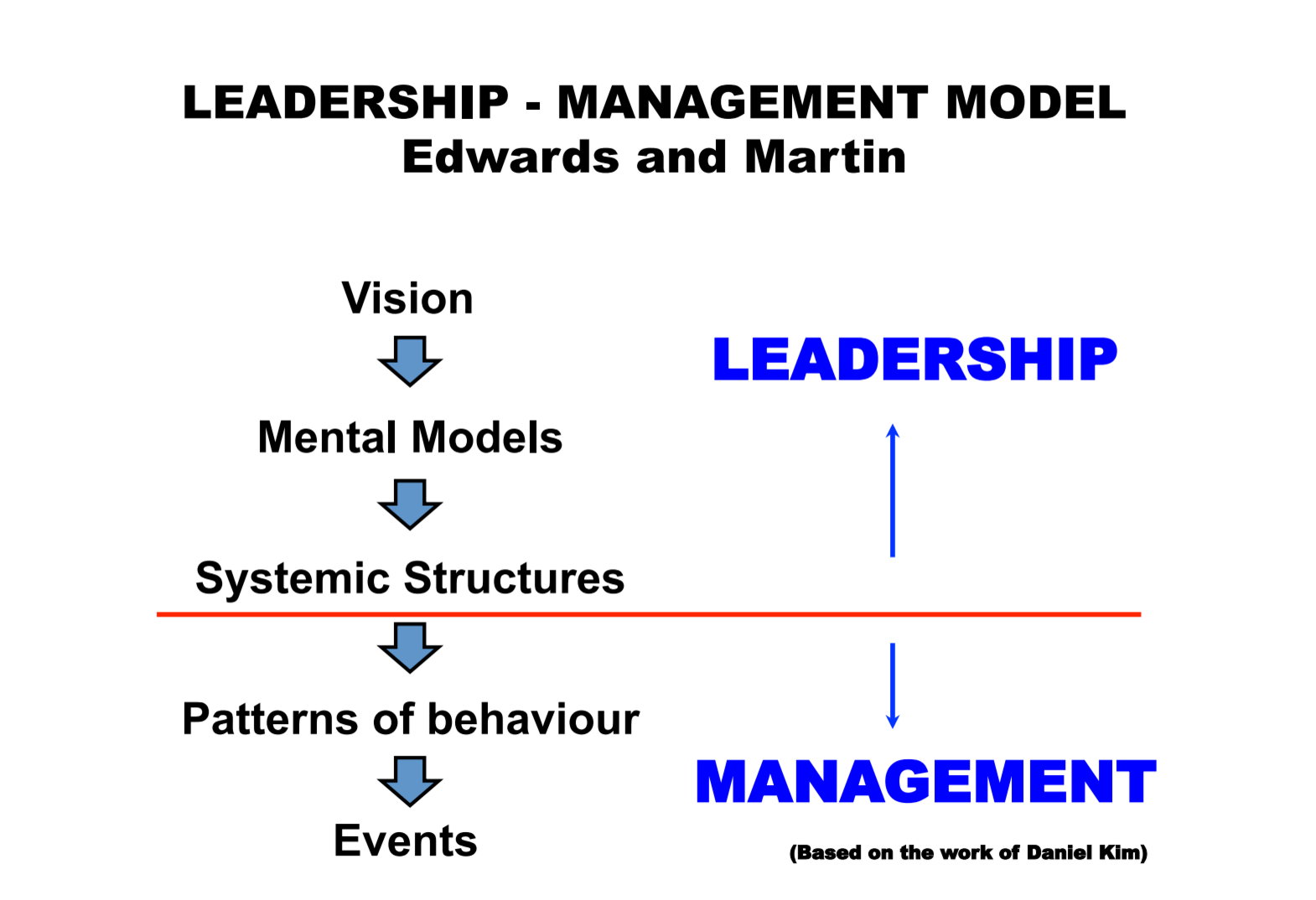
Leadership and Management Model
Make sure the systems and structures are aligned with the vision to be above the line. The higher up the levels of perspective (on the left of the slide) the more leverage we have. Values and beliefs need to become mental models for the vision to be lived. 

This visioning process is a valuable, deep and respectful reflection tool. I look forward to utilising my learning from this experience in my own workplace and beyond.
Action without vision is only passing time, vision without action is merely daydreaming, but vision with action can change the world.
Part 2 of this process is available at this link. 

Sunday, 20 September 2015

3 out of 4 learning terms completed : gathering feedback to go forward

A recent article in eSchool News captures the potential of learning spaces that enable holistic development for all learners. "We have a responsibility to foster each student’s inherent genius and draw out his or her natural brilliance while maximising emotional growth."

Our Engaging Learning Spaces (ELS) for 2015  are a move away from traditional classrooms to more fully address our learning goal : To engage every learner in deep learning for success. 

We are about to finish our third term with ELS. As a staff, we are teaching inside an authentic, living inquiry. We are continually reflecting, discussing and implementing small changes and improvements along the way. As we prepare for Term 4 and for 2016, we remain open to further feedback from students and parents to ensure we maintain a balanced approach to our ELS's. 

We have already received feedback from over one hundred educators visiting our ELS's this year. The most recent group of principals from Otago Southland shared their thoughts via "post it" notes. 

Students
This week, I will be gathering feedback from students. I will be involving the voice of our learners. What is it like to be a learner in this hub ? What's going well to engage you in learning and what could be improved ?

Parents
Parents are invited to email their responses to the following questions directly to jjackson@stjoseph.school.nz

1. What has worked well to engage your child in their learning this year ?

2. What's not going well ? Keep in mind the benefits of being solution focused. If you believe something is not going well, support your feedback with a suggested solution for improvement.

3. Any further comments

Staff have already begun to complete a similar document with their own feedback. We will be supporting this with achievement data.

All feedback, will be collated, shared and contribute to our next steps going forward.

An earlier blog entitled :
Are you willing to create disturbance and be disturbed yourself ? shared a message from a visiting professor. "We can all benefit from the ability to challenge and be challenged. We need to be willing to disturb and be disturbed - to make people stop and think aloud, talk and innovate at all levels. We can use difference to challenge and stimulate reflection that can grow practice for all learners."